





From Complexity to Clarity: Solving GRC Challenges with Cura’s Data-Driven Approach
As businesses navigate an increasingly complex and unpredictable environment, Governance, Risk, and Compliance (GRC) have shifted from back-office obligations to boardroom priorities. Yet despite their growing importance, many businesses still approach GRC in a piecemeal, reactive manner, hampered by outdated systems, mounting regulatory demands, and a lack of strategic alignment across leadership.
At Cura, we’ve worked with hundreds of businesses across industries to partner with them and help transform GRC from a burden into a competitive advantage.
Here’s what we’ve learned:
The most successful GRC strategies are data-driven, integrated, and proactive.
Let’s explore the top five challenges businesses face in GRC and how Cura helps solve them.
- Fragmented Systems and Siloed Data
Many businesses still rely on spreadsheets, legacy tools, and manual processes to manage GRC. This leads to inconsistent data, duplicated efforts, and blind spots in risk visibility. Cura’s centralized platform integrates seamlessly across departments and systems, providing a unified view of risk, compliance, and governance activities. Real-time dashboards and automated workflows eliminate silos and empower cross-functional collaboration.
- Keeping Up with Regulatory Change
Regulatory landscapes are constantly shifting, from data privacy laws to ESG mandates. Staying compliant can feel like chasing a moving target. Cura’s dynamic compliance management tools allow businesses to map regulations to internal controls, monitor changes, and automate updates. Our platform helps businesses stay ahead of regulatory shifts with confidence and agility.
- Lack of Risk Visibility and Predictive Insight
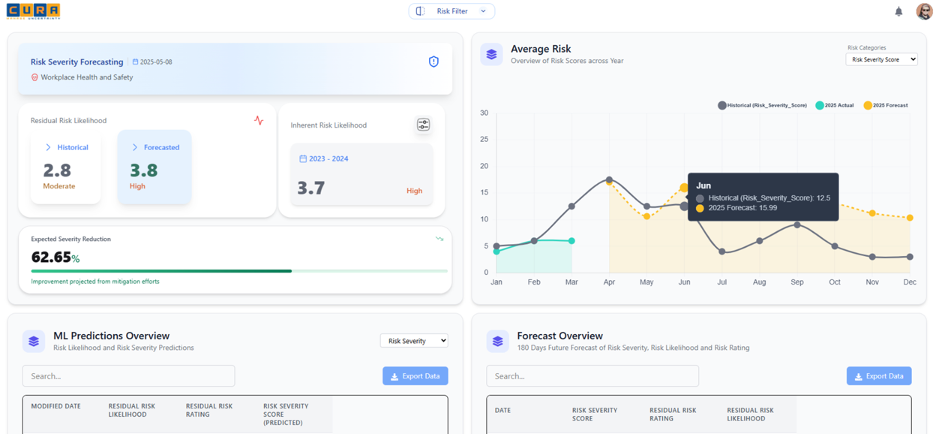
Without a clear view of emerging risks, businesses are forced into reactive decision-making, exposing themselves to costly disruptions. Cura’s advanced risk assessment and analytics tools help businesses identify, quantify, and prioritize risks. Predictive modeling capabilities enable proactive planning and smarter strategic decisions.
- Inconsistent Reporting and Audit Readiness
Manual reporting is time-consuming and error-prone, making audits stressful and compliance reporting unreliable. Cura automates reporting and audit trails, ensuring accuracy and consistency across all GRC activities. With customizable templates and real-time data, businesses can be audit-ready at any time.
- Limited Engagement from Leadership and Stakeholders
GRC is often seen as a compliance checkbox rather than a strategic driver, leading to low engagement from executives and business units.Cura’s intuitive dashboards and executive-level insights make GRC accessible and actionable for leadership. By aligning GRC with business objectives, Cura elevates its role from operational necessity to strategic enabler.
Why a Data-Driven GRC Strategy Matters
In a world of constant change, data is the foundation of effective GRC.
A data-driven approach enables:
- Real-time decision-making with instant access to risk indicators and compliance metrics.
- Proactive risk management through predictive insights and historical trend analysis.
- Transparency and accountability with centralised data and automated audit trails.
- Scalability and agility to adapt to new regulations, geographies, and business models.
- Continuous improvement by refining controls and benchmarking performance over time.
Cura transforms raw data into strategic intelligence, helping businesses not just manage risk, but lead with it.
Turning GRC into a Strategic Advantage
GRC doesn’t have to be complex, reactive, or siloed. With Cura’s integrated, intelligent, and data-driven platform, businesses can overcome they’re most pressing GRC challenges and build a culture of resilience, accountability, and agility.
Ready to transform your GRC strategy?
Leave a Reply